Waistcoats and Workshops
First week back after getting married, and there were a lot of kind words and good wishes after the wedding. It was a genuinely magical day, we feel very lucky and I got to wear a waistcoat for the first time in decades.
The main work focus this week was Patient Initiated Follow UP (PIFU). We had a strong workshop in Leeds on Tuesday — credit to the secondary care services team for facilitating — and it was good to have a broad mix in the room: National PIFU, PEP PIFU, onboarding and adoption, integration, and the benefits side. One of those sessions that's valuable precisely because it brings the right parts of the system together rather than running them as separate conversations.
Scaling digital PIFU adoption via NHS App is a top priority for us this year and it was important that we start the FY with a shared understanding of what and how we want to achieve this year.
Separately, direct integration — our work to connect directly with EPR systems in hospitals — is shaping up as a major focus for the year. A different initiative, but the same principle: the hard, structural work that makes everything else actually land.
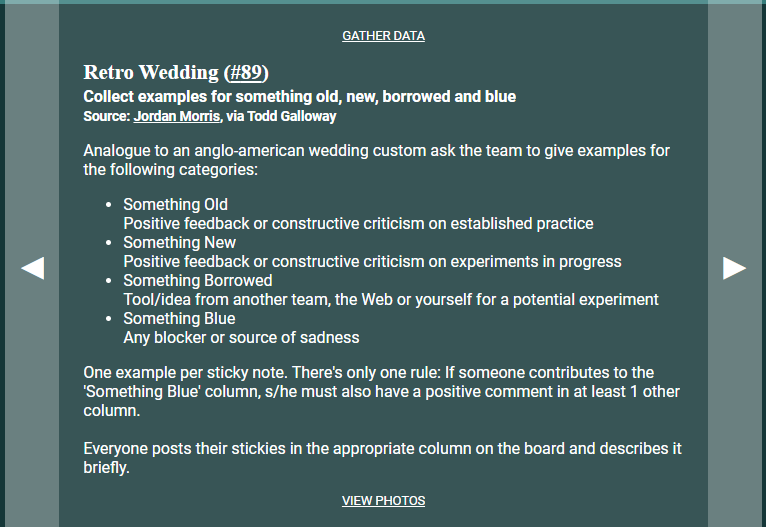
This week I had the planning call for next week's Delivery Manager community of practice session, which is focused on retros. The thinking going into it is around what a retro actually is — and what it isn't — and the idea that a good one needs both the right ingredients and enough variation to stay useful. Someone recommended Retromat as a tool for that, and it looks genuinely good for keeping things fresh rather than running the same format on repeat. Spookily when I tried it one of the elements was wedding related 
 (pic below). Running retros isn't the sole preserve of Delivery Managers so if you cook up a recipe you want to try out, talk to your team and give it a go.
On the reading front, I've finished both Four Thousand Weeks and Man's Search for Meaning this week. The first is a useful corrective: time is limited, so the job is to prioritise, focus on what matters, and limit work in progress — the counterintuitive bit being that doing less, properly, gets you further faster. The second is harder going but worth it. The idea that stays with me: between what happens and how you respond, there is still a choice. That feels worth carrying into a busy programme week.